
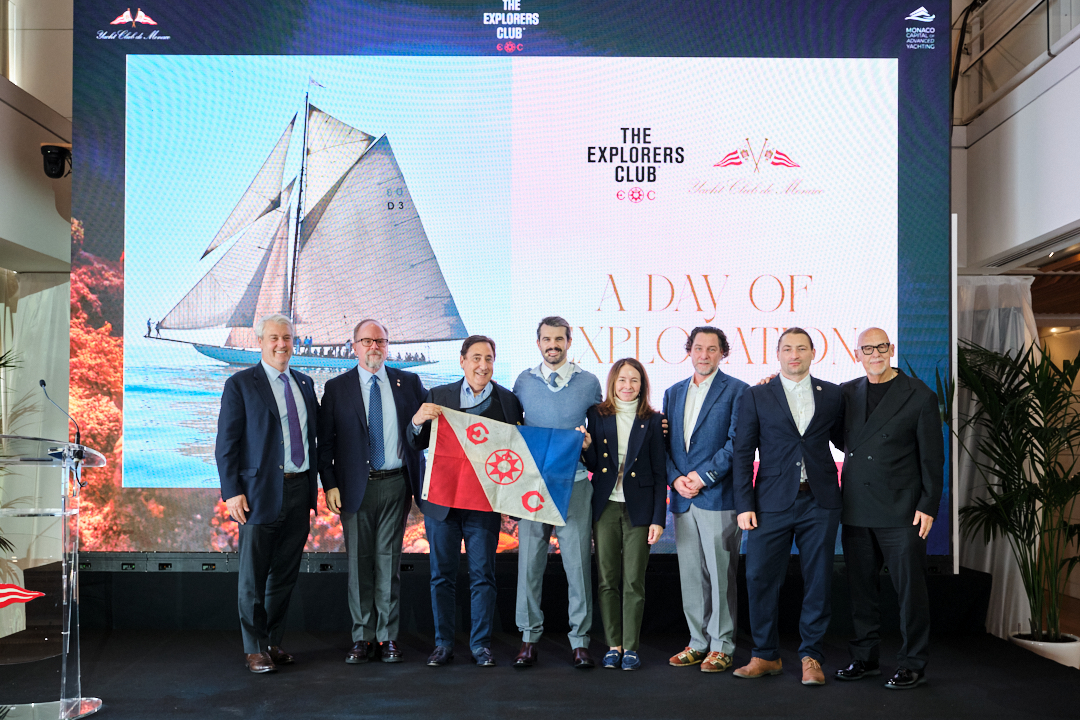
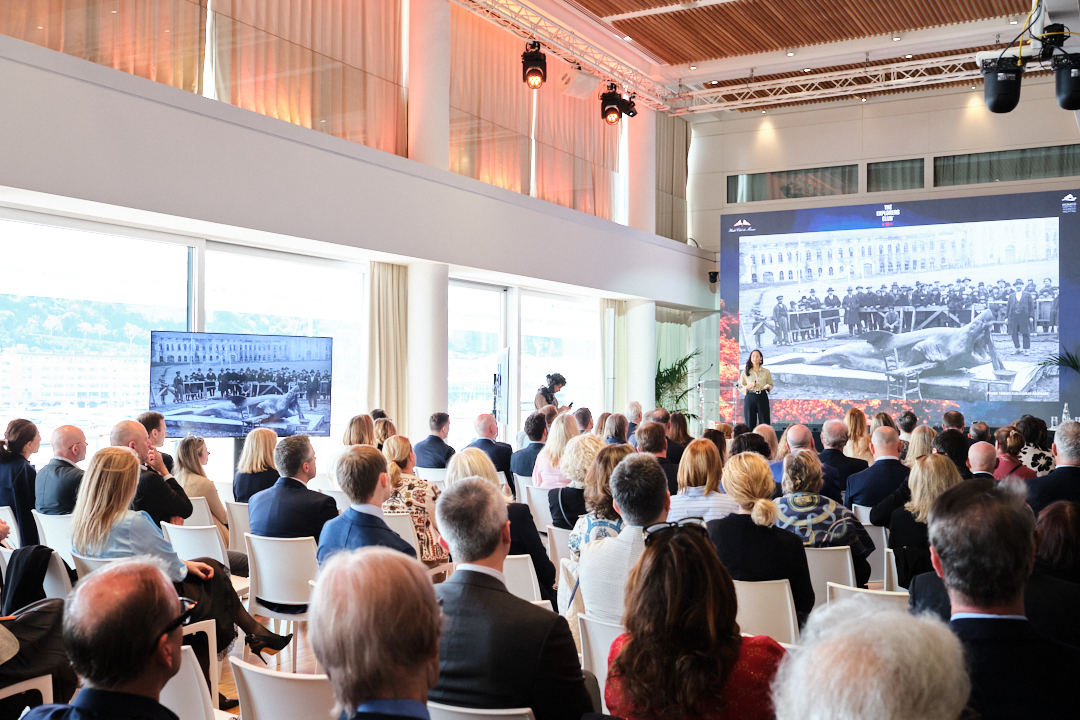
Following the first Yachting Student Fair to discover yachting professions, followed by the inauguration of the Explorer Dock, day three’s focus was the Day of Exploration at the Yacht Club de Monaco. Dedicated to science, adventure and knowledge, it was organised by the YCM in collaboration with The Explorers Club of New York. Explorers, scientists and experts exchanged ideas on a wide range of issues spanning research and fieldwork to knowledge sharing. Presentations included topics ranging from the deep sea to polar regions and space exploration. For Richard Wiese, President of The Explorers Club, “Good ideas never come from one place, they are universal. The more diverse people we gather together to share their experiences, the stronger the message”.
Committed to protecting the Blue Five (sharks, rays, turtles, dolphins and whales), marine biologist Daniel Cáceres Bartra discussed his research to protect Peru’s tropical waters, home to 70% of the country’s marine biodiversity. “We must protect species that make an ecosystem function,” he said, emphasising that “biodiversity reacts to the pressures it faces”. His talk stressed the need to always measure the effectiveness of conservation policies and take local realities into account.
Work done by scientists is based on their observations. For some, research is focused on developing new tools to improve understanding of deep sea biodiversity, an example being the Bioinspiration Lab at MBARI which develops imaging technologies to observe life in extreme environments. For its director Kakani Katija, areas that remain unknown are vast, and drawing inspiration from living organisms to design new technologies remains a driving force: “Less than 0.001% of the seabed has been visually observed,” she points out, leaving “immense gaps in our knowledge”.
Invaluable knowledge can often be gleaned from wildlife analysis. Through the Anthroposea initiative for example, scientist and photographer Arzucan “Zuzu” Askin is an expert on sharks whose decline in numbers is accelerating due to human activities. Species that have been on Earth for over 450 million years are now under threat: “Since the 1970s, human activity has wiped out 71% of the world’s oceanic populations of sharks,” she says, adding that “100 million sharks are killed every year”. Her research in the Maldives is based on monitoring individuals, some of which have been closely observed for many years. Finn, Georgina and Pirate, three identified by her team, all bear the scars of their interactions with humans. In her opinion, the situation is critical: “In some regions, sharks have declined by over 80% and there’s a 50% chance they will disappear within the next decade. That means we have ten years to act”.
The exploration theme also involved a journey back in time. Trevor Wallace, founder of the Menorca Shipwreck Project, brought to life several years of Mediterranean maritime history revealed in excavations at the port of Ciutadella. Inviting the audience to “travel back in time”, he described the discoveries made at a site where several ships went down during a violent weather event. The research and excavations are a result of a collective effort “shared between scientists, students and explorers”. For him, the true value of these expeditions lies in the human experience itself: “The most valuable thing you will find is a shared voyage acquiring knowledge, a community that is developing expertise – a meeting of minds”.
A world expert on narwhals, Dr Martin Nweeia reflected on several decades of research conducted in the Arctic, a case of scientific observations and indigenous knowledge combining. In his view, the close connection between humankind and the ocean is timeless, describing the oceans “as a cradle of life” and pointing out how humans always seek “to reconnect with the ocean”. His work on the narwhal’s tusk, a sensory organ unique in the animal kingdom, reflects the importance of continuing scientific exploration to better understand living things. Explorations must also draw on local knowledge, particularly, in this area, the Inuit people. His talk concluded with a traditional Greenland dance performed by Navarana K’avigak’ Sørensen, because exploration is also about interacting with other cultures.
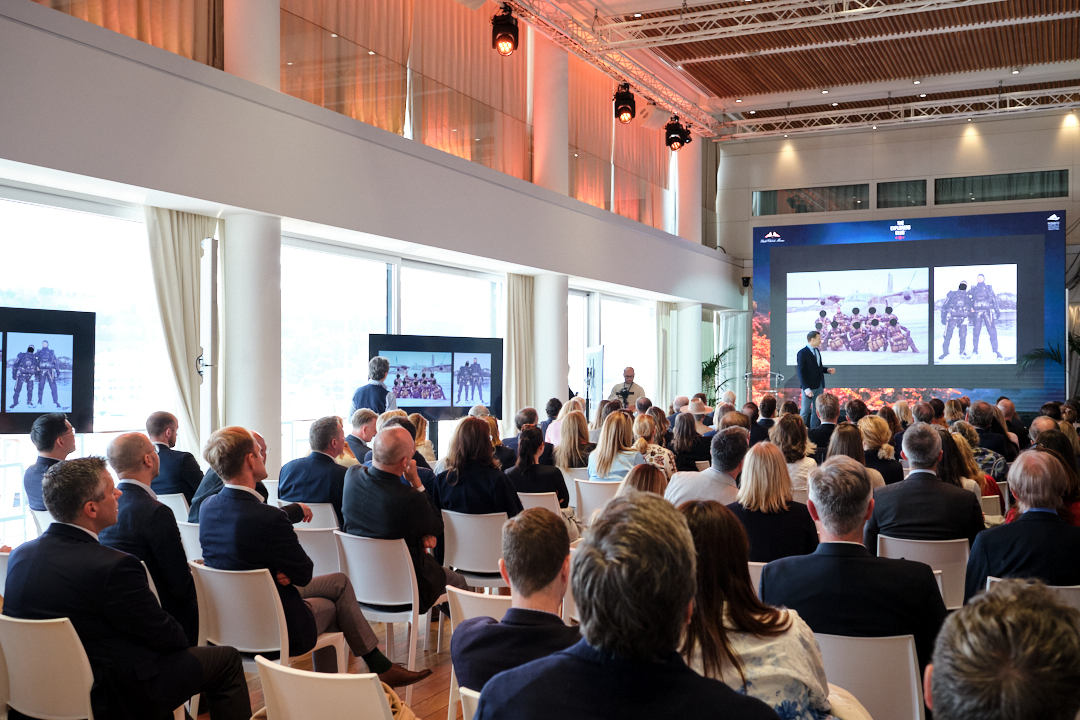
All eyes turned to the skies as Franck Baldet, Technical Director at Venturi Space presented the Lunar and Martian rovers being developed for future Artemis programme missions. Recalling that space research also contributes to understanding our own planet he described Earth as an oasis and explained why “we need to explore the moon to understand our origins”. The missions in preparation are targeting the lunar South Pole in particular, where the presence of ice represents a major focus because “water is life”.
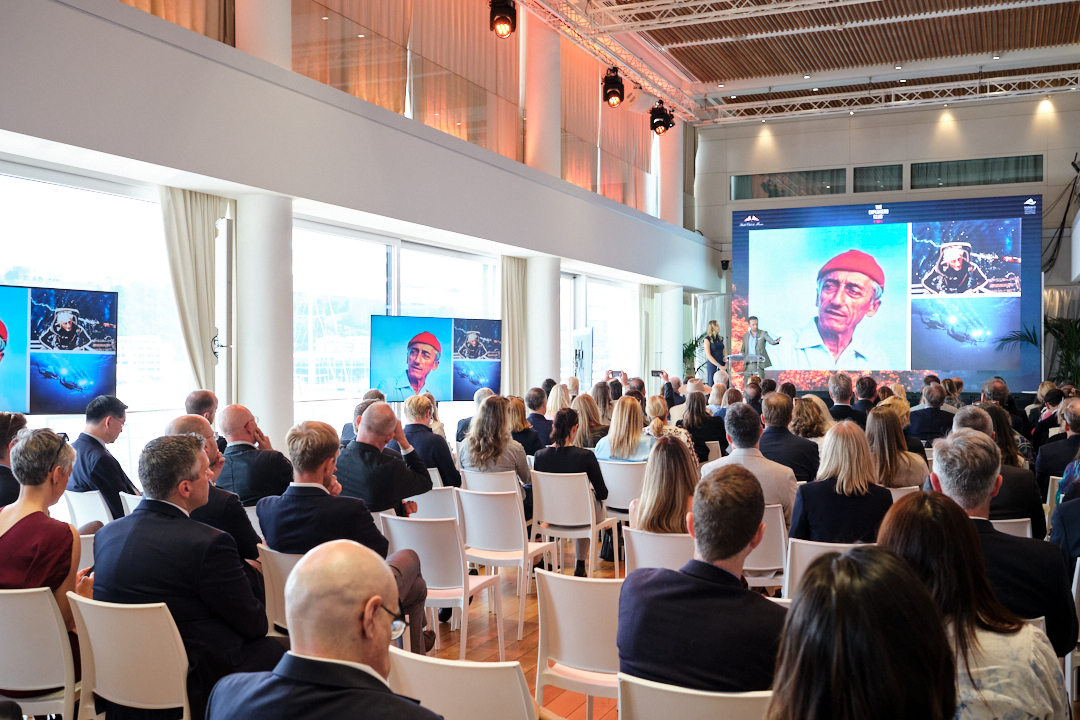
The legacy of the great explorers was also celebrated with Philippe and Ashlan Cousteau engaged in raising awareness among younger generations on ocean protection. He invited the audience to recall the time the sea changed their perspective, “the moment when the ocean not only impresses you but transforms you”. He recalled that Jacques-Yves Cousteau had dedicated his life to making the ocean visible to the public, convinced that “the ocean is not separate from human life, it is the foundation”. But he says that today raising awareness is no longer enough: “Protecting the ocean is necessary but it remains a defensive posture, if we want a viable future we must also rebuild it”. For the couple, the challenge goes beyond conservation and that it is essential to move from exploitation to regeneration: “We are the first generation to have the knowledge, technology and the means to create a new relationship with the ocean”.
The resources required to make discoveries are essential as Norwegian biologist and navigator Andreas B. Heide knows only too well. For several years he has led explorations to the polar regions on his sailing boat Barba, which he uses as a scientific platform. His path has led him to this vocation. From being a conventional researcher, he now takes a freer approach to exploration. His expeditions to the Arctic are about scientific observations, encounters and producing educational content, convinced that knowledge is essential for protection. Regards the ecosystems observed off Norway, he stressed again that showing the reality in the field can change perceptions of vulnerable areas. Above all modern exploration is about the people involved: “No matter what type of boat you have, the most important aspect is always the team”, before adding that “in the past there were white dots on maps, today there are red dots for places we must protect”.
Technical resources were also discussed in the exchange between explorer Victor Vescovo and naval architect Espen Øeino, who presented a project of a vessel specifically designed for mapping the seabed. “Around 74% of the seabed remains completely unknown. We have better maps of Mars and the Moon than our own planet,” noted Victor Vescovo. The reason is cost which severely limits scientific campaigns, hence the objective to design a vessel able to do the job more quickly, and to be more accessible and as simple and efficient as possible. The choice of a compact vessel with a reduced crew is logical as Espen Øeino explained: “The main cost factors are fuel and crew. If the vessel is smaller, it consumes less and requires fewer staff”. The ambition is to be able to map much larger areas in the future.
The penultimate discussion was on the role of images in communication with photojournalist Steve McCurry and Filippo Ricci, representing Florentine fashion house Stefano Ricci, which is involved in projects combining exploration, photography and creation. Filippo Ricci explained how these expeditions in Egypt, Iceland, the Galápagos and Patagonia are conceived to share the experience of exploration with a wider public: “Today, luxury is no longer about what we own but what we experience. Adventure and exploration have become the luxury,” he said. Steve McCurry reflected on how travel and encounters have nourished his work for over 50 years. When talking about his reports from India, Ethiopia and Tibet he said photography remains the best way of bearing witness: “Wherever I travel, I am always fascinated by how people present themselves, how they dress, how they express their culture”. Some images are just about capturing an unexpected moment like the famous Afghan Girl portrait, taken by chance in a school.
The day concluded with a discussion between photographer and diver Prince Hussain Aga Khan and renowned marine biologist Sylvia Earle, who discussed the role of science and imagery for a deeper understanding of ocean-related issues. For Hussain Aga Khan, his work primarily involves sharing his observations to inspire a desire to protect them: “My role is simply to show what I see and love in order to encourage others to love and protect species and ecosystems,” he said, noting that marine biodiversity remains largely unknown despite decades of research. Sylvia Earle put the emphasis on the responsibility of our generation, as the first to possess the knowledge necessary to measure the impact of human activity: “We are the first generation to know what we are doing to the Earth, and perhaps the last able to act to preserve a liveable world”. She echoed previous speakers opinions that a better understanding is the key to protecting the ocean, and reminded the audience that curiosity remains the driving force behind all types of exploration: “Everyone has the capacity to be an explorer. We just need to hold on to that curiosity we all had when we were children”.
As the day progressed, it was clear that exploration is not limited to discovery but also to the research process, transmission and protection of the natural environment.
The event concludes tomorrow, Tuesday 24 March, with the 30th Captains’ Forum, organised in collaboration with Oceanco, MB92 Group, Jutheau Husson and ICON Yachts, that turns the spotlight onto applicable solutions for more responsible yachting with more involvement in research.
In the evening the 6th YCM Explorer Awards by La Belle Classe Superyachts in partnership with UBS and Bombardier honours owners who use their yachts as platforms for exploration, scientific research or technological innovation.
With this programme, YCM is following up on a simple idea to not only make yachting a means for exploration, but also transmission and innovation in line with the collective ‘Monaco, Capital of Advanced Yachting’ approach.
Share: