
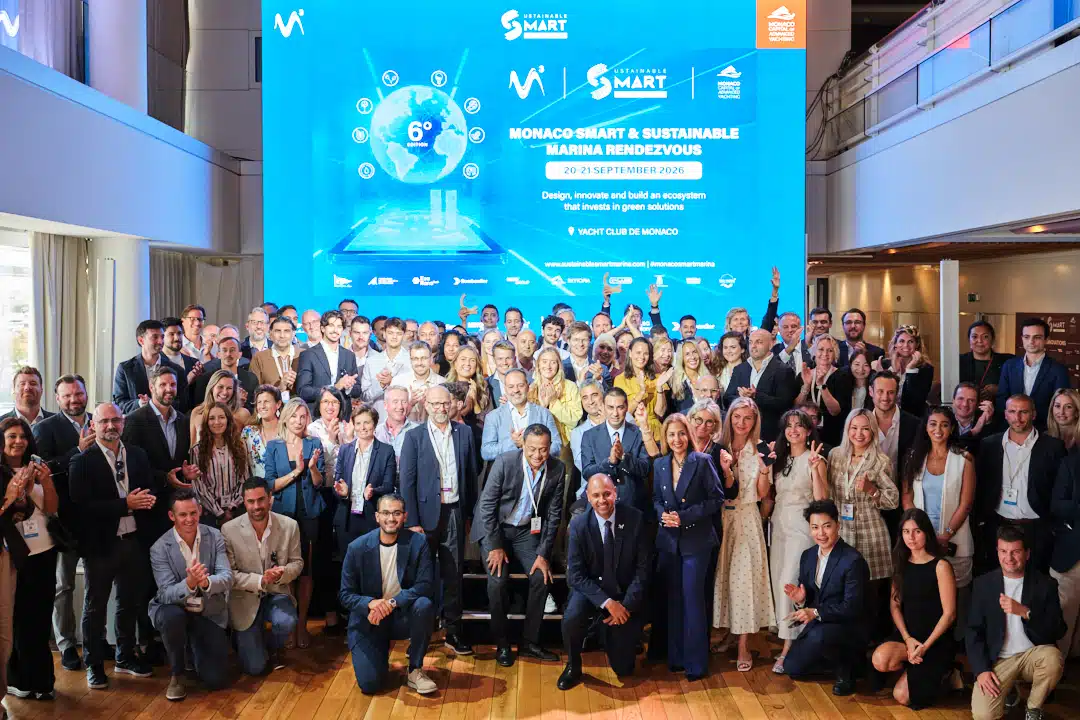
Biodiversity, investment and new uses, alongside shore power, artificial intelligence and cybersecurity were the focus of two days at the Monaco Smart & Sustainable Marina Rendezvous which analysed marinas from every angle. The event was organised by M3 Monaco, a consultancy specialising in development and management of marinas, yacht clubs and sailing schools. Supported by the Prince Albert II of Monaco Foundation, ESA NanoTech, Bombardier, MB92 Group, Skytopia, Plus Marine, Italian Yacht Masters, Alcenza Properties and Raunautica, this 6th edition gathered together professionals from 30 nationalities to share their projects and experiences. “In collaboration with YCM, we have an extensive network and expertise across the board in innovation and quality. We are well placed to help forge connections and links between start-ups, major companies and innovators to create better solutions for marinas and yacht clubs,” said José-Marco Casellini, CEO of M3 Monaco.
Biodiversity was at the centre of most discussions, primarily how it can be integrated into marina operations and economics. Dr. Megan Clampitt (PONT scientific programme at PONANT) showed how expedition ships can serve as research platforms in hard-to-reach areas, allowing scientists to collect data while sharing their work with passengers. As for Gonca Melek Özkan (Setur Marinas), she partners universities and experts to better understand and monitor species found in her company’s marinas. However, observation and measurements are not enough. Sofía Sonsoles Doyágüez Sánchez (Go Bridge the Gap) raised the issue of funding, stressing that to convince investors, solutions must demonstrate their effectiveness and address a clearly identified need. Public funding, pilot projects with partners, and private capital can all play a role at different stages, depending on the level of risk. With his underwater greenhouses, Luca Gamberini (Nemo’s Garden) advocates another approach that combines agricultural production, research and a tourism experience. He believes marinas and resorts are ideal locations for such installations as they are at the interface between land and sea. Underpinning all these different approaches is data: knowing an ecosystem’s baseline state, tracking its evolution and having robust indicators to measure results are key.
Discussions moved on to investment regarding the value of port infrastructure and the models used to finance its transformation. José Valencia (Nauplia Capital), Rodrick T. Miller (Miami-Dade Beacon Council), Marcos Pellejero Ibáñez (Mirazur Capital), Chris Wong (Airport Authority Hong Kong) and Andreas Bäckman (InfraVia Capital Partners) each compared their approaches to the market. Long viewed as real estate or leisure assets, marinas are increasingly regarded as an infrastructure in their own right. Demand is rising while supply remains constrained, plus many facilities were designed decades ago for smaller vessels. Adapting basins, reconfiguring berth layouts and modernising services can significantly alter a site’s economic equation. Debate also highlighted factors that still deter investors, particularly a lack of data and standard benchmarks for indicators as basic as occupancy rates, and operating and transaction revenue. Add to this concessions that are sometimes too short and lack clarity regarding their renewal. Another recurring theme was that marinas can no longer be viewed in isolation. In Miami and Hong Kong, they are integrated into a broader tourism, retail, dining, employment and waterfront development strategy. Public-private partnerships play a pivotal role in this context, particularly in handling major infrastructure projects, dredging operations and environmental compliance processes.
Architecture, engineering and innovation moved discussions onto marina design. Adrian Griffiths (Chapman Taylor), Haneen Alrawashdeh (AYLA OASIS) and Joe Greene (MSEA Engineering) discussed how infrastructure can evolve, without always starting from scratch. In Malta for example the project presented around the Grand Harbour retains the port operations while reopening part of the waterfront to the public. At Ayla Oasis in Jordan, a different challenge is to uphold long-term environmental commitments during the project, and integrate them into day-to-day operations for example through regular water quality monitoring. The issue of adapting existing facilities was also addressed, covering everything from reconfigurable pontoons to new systems that can be added to older marinas.
From electricity, water, data and connected equipment, workshops addressed new dockside usage patterns and the infrastructure required. Artificial intelligence was discussed with the same focus on practical applications, looking at what actually works in shipyards, marinas, or on board, rather than treating AI as a theoretical subject. Other topics included cybersecurity for connected marinas and new materials for building pontoons, breakwaters and moorings, and how marinas can and should progress towards recognised standards and certifications.
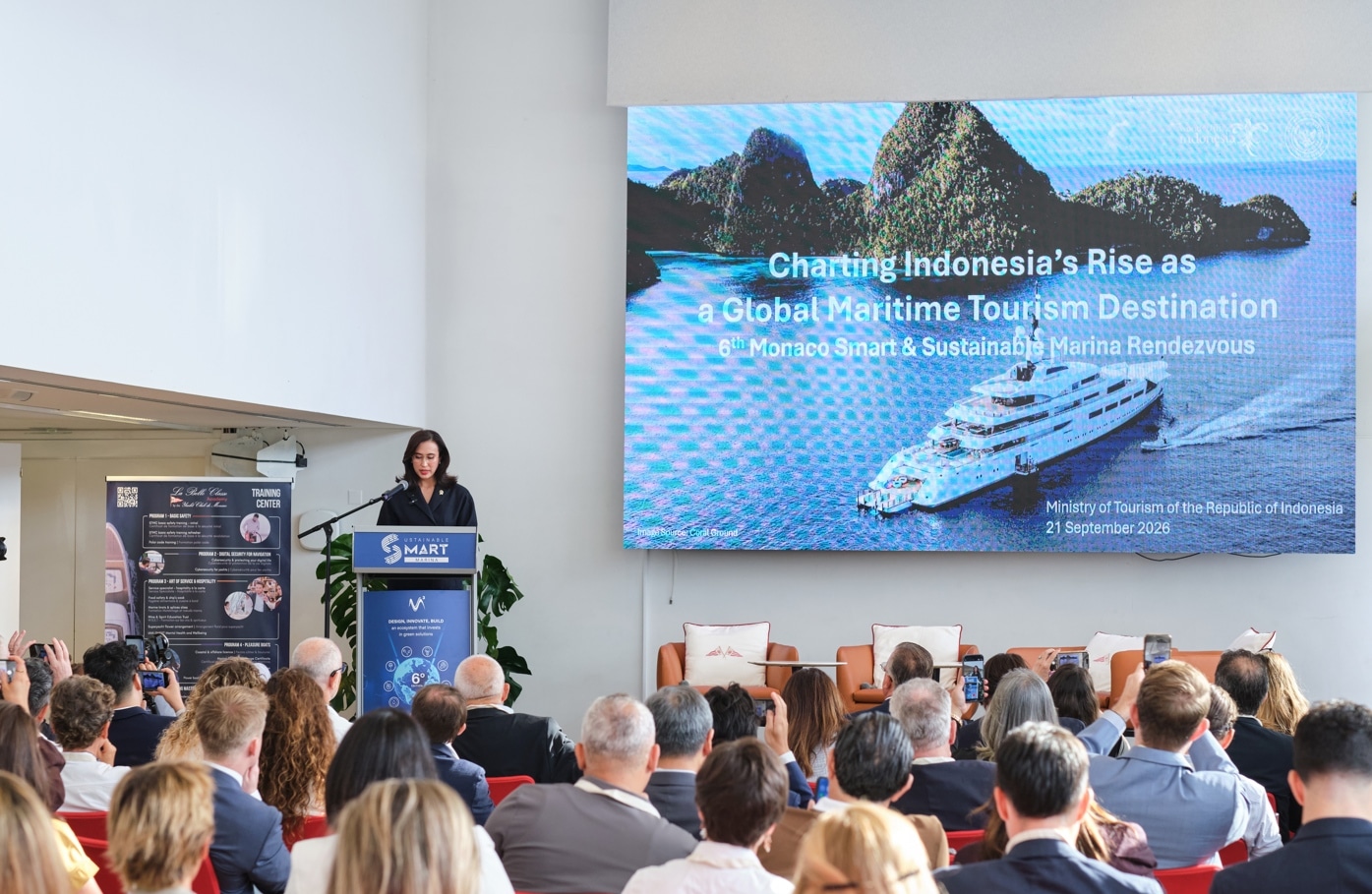
On a regional level, H.E. Widiyanti Putri Wardhana, Minister of Tourism of the Republic of Indonesia, opened Monday’s sessions with an address outlining her country’s vision for sustainable maritime tourism: “It is our vision to become a premier destination for maritime tourism, particularly yachts, supported by world-class facilities and a competitive tourism ecosystem. We see maritime tourism as an opportunity to further elevate Indonesia’s tourism offerings, maximise the potential of our marine destinations and generate greater benefits for local communities”.
The day before, alongside representatives from the maritime transport, logistics, port, urban planning and private sectors, H.E. Dr. Tarek M. Dahroug, Ambassador of the Arab Republic of Egypt to France and Permanent Delegate of Egypt to UNESCO, had presented his country’s ambitions for tourism and port infrastructure. He highlighted in particular a lack of specialised training: “We don’t have an institute dedicated to the recreational boating sector”, he said, hence the desire to “cooperate with Monaco and European countries” and benefit from their expertise.
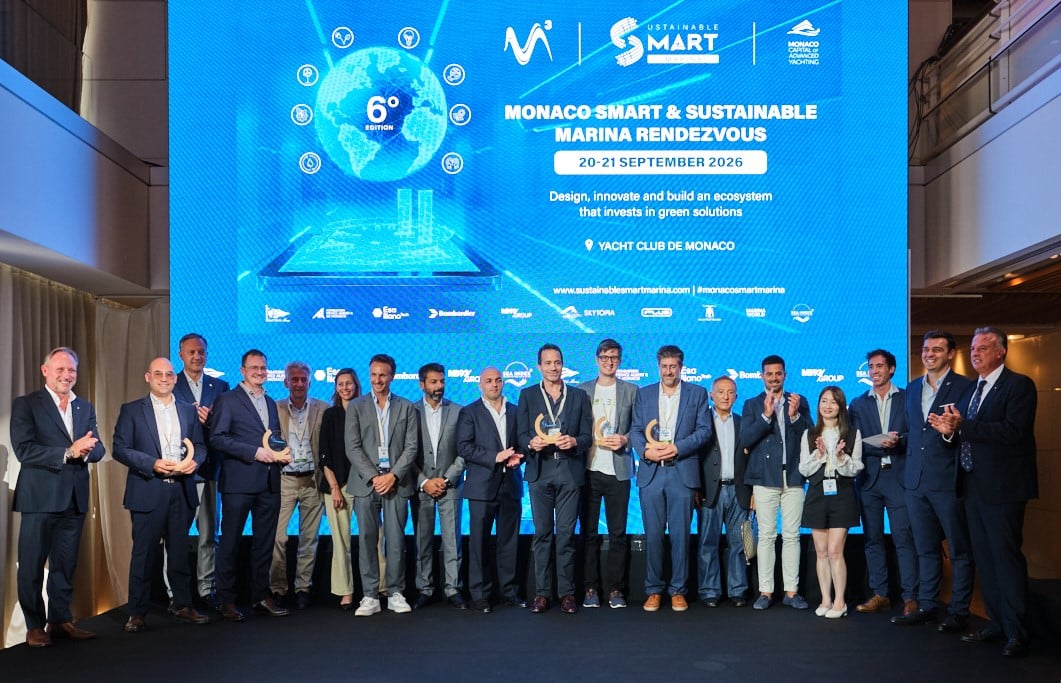
The Monaco Smart & Sustainable Marina Awards concluded the two-day event. For the first time companies in the innovation category were grouped according to their development stage: pre-revenue, post-revenue, and scaling revenue. Around 30 companies had been selected, all listed in an E-Catalogue online, and assessed based on biodiversity preservation, energy, marina operations, waste, materials and water management.
Pre-revenue category: Kolbev (Switzerland) stood out with its mobile robotic charging solution, which the jury viewed as a smart, cost-effective way for marinas to charge electric boats before investing heavily in fixed charging infrastructure.
Post-revenue category: already present in 2024, The Warming Surfaces Company (Finland) won with Halia®, a very low voltage heating technology that is integrated directly into surfaces, furniture or interior fittings.
Revenue Scaling Category: with Seadamp, ready to be rolled out internationally, the Italian company Seares (a returning participant in 2022, 2023 and 2025) stood out with its mechatronic mooring system. The system adjusts to wave motion while capturing some of that energy to power onboard sensors that monitor mooring conditions in real time.
Innovation Coup de Cœur: Nemo’s Garden (Italy) for their underwater biospheres designed to grow plants without soil or pesticides, and using seawater to naturally produce fresh water and encourage marine biodiversity.
The architectural competition focused on the sustainable transformation of the Opatija marina in Croatia’s Kvarner Bay. The project required a “Marina Hub” with marina office, dining, retail and wellness facilities, plus sailing school and centre dedicated to marine biodiversity, education and knowledge sharing. Every aspect had to be in harmony with local heritage and add value to the area. The jury selected Jasper Architects (Germany), commending the building’s successful integration, the precision of the plans and near-perfect scores achieved for functionality and aesthetics. The jury’s Architecture Coup de Coeur prize went to Francesco Gruni from the University of Pavia (Italy), competing in the architecture student category.
At the same time, six marinas, yacht clubs, and nautical centres in Monaco, France, Saudi Arabia, Jordan, and Qatar received their S3 (Smart & Sustainable Standard) certification. It requires a maturity assessment, risk analysis and a continuous improvement roadmap. Based on data, interviews and an on-site audit, the process gives each facility an opportunity to identify its level of maturity and better target its investments.
These awards mark the end of two days of discussions but not of ongoing dialogue. The B2B platform Smart Marina Connect was launched this year to enable companies, marina managers and project developers to maintain contact beyond the event. The YCM continues its discussions with yachting industry stakeholders this week at the 31st Captains’ Forum (Thursday 24 September). The Club is also set to launch the Superyachts Marina & Port Management Executive Masterclass, a new training programme offered by La Belle Classe Academy on port and marina management. It is aimed at industry professionals as well as captains and crew members wishing to transition into shore-based roles.
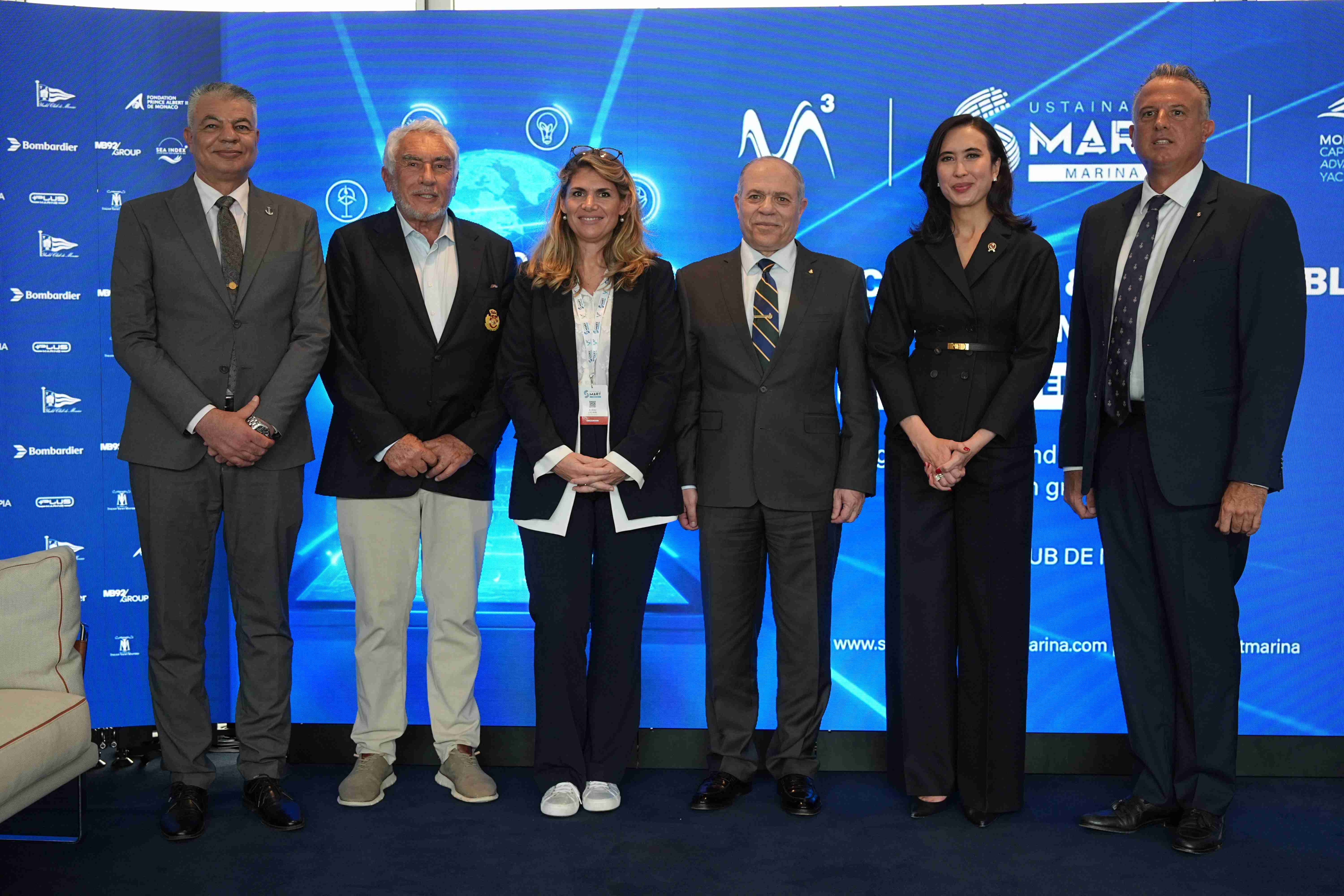
Caption: GMB07663_©AP_Gian Mattia D’Alberto_BD
From left to right:
– Rear Admiral Osama Hussein Elsayed Negm, deputy head of the Maritime Transport and Logistics sector (MTLS) for Ports Affairs, President and CEO
– Mr Bernard d’Alessandri, Managing Director & General Secretary of the Yacht Club de Monaco and President of the Cluster Yachting Monaco,
– Mrs Audrey d’Alessandri, Executive Director, M3 Monaco
– Rear Admiral Dr. Nehad Shahin Ali Shahin, Deputy Minister of Transport for Maritime Transport & Logistics, Arab Republic of Egypt
– H.E. Widiyanti Putri Wardhana, Minister of Tourism of the Republic of Indonesia
José-Marco Casellini, CEO of M3 Monaco
Share: