As part of the inaugural Monaco, Capital of Advanced Yachting Rendezvous, the Yacht Club de Monaco held its 30th Captains’ Forum in collaboration with Oceanco, MB92 Group, Jutheau Husson and ICON Yachts, a gathering that is now established as a focal point for the international yachting community. Organised every year under the aegis of the Captains’ Club this year it brought together captains, owners, engineers, scientists and manufacturers. Entitled ‘How to follow heroes: the intersection of science, yachting and exploration’ the objective was to focus on tangible solutions. Divided into two parts the morning sessions highlighted professionals experience.
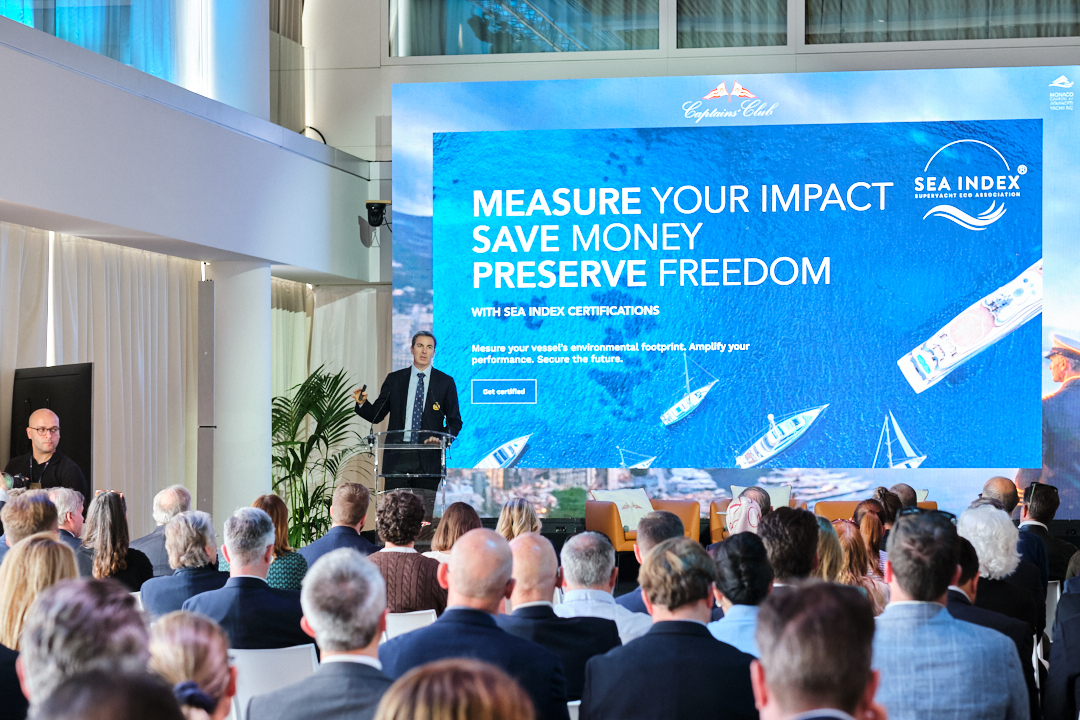
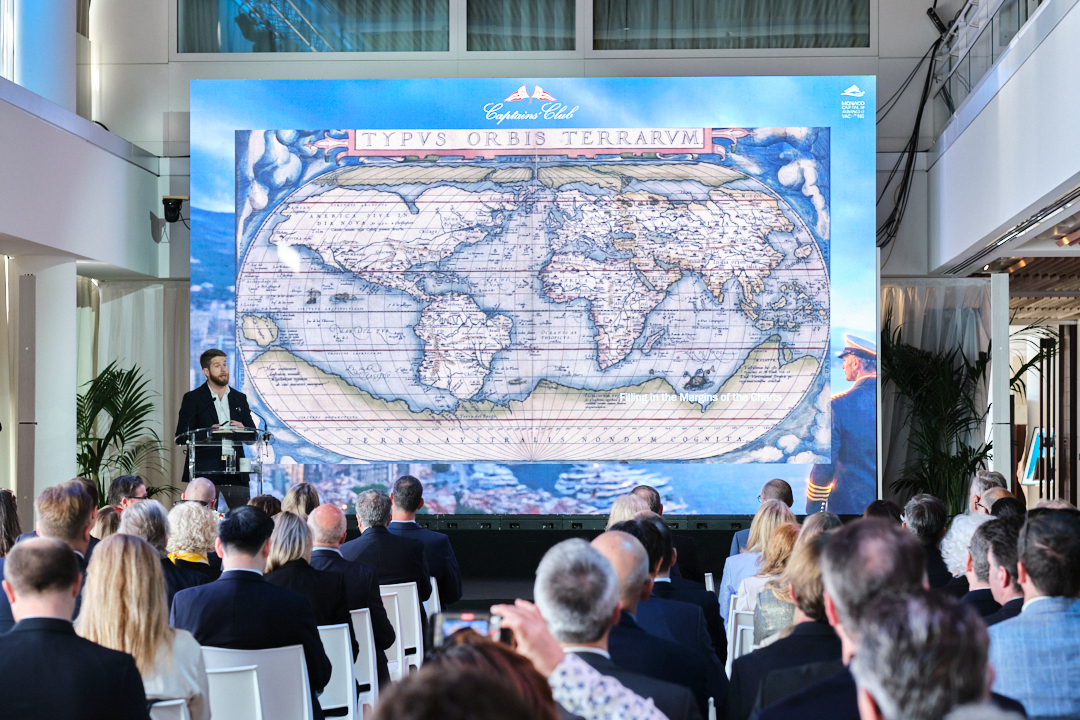
Before delving into technical details, Micca Ferrero, head of ICON Yachts, recalled the context in which yachting is evolving. The sector is indeed going through a pivotal period. “We are living through an historic moment where modern yachts are finally opening up to exploration and ocean protection in a practical way,” he said adding that “the ocean doesn’t need our admiration, it needs us to get involved”.
The navigation, exploration and science session was opened by Captain Maiwenn Beadle, renowned for her expeditions in polar regions. Reflecting on several decades sailing in isolated regions, she stressed the special responsibility that crews have in extreme environments. “Today, I am sailing in the most challenging places in the world, in ice, in the Arctic and Antarctic,” missions that require constant vigilance as she explained: “I am navigating in pristine environments, far from any help or support. It is a huge responsibility, both towards the environments I’m sailing in but also the people I take with me”. She reminded the audience that exploration has always been linked to the pursuit of knowledge: “They set out with questions and they wanted to come back with answers”.
In his talk entitled ‘Floating gold: the power of whale poop’, the scientist and entrepreneur Matthew Zimmerman, a sonar technology specialist involved in cetacean research, highlighted the role they play in balancing the oceans. Their disappearance would have direct consequences for the global ecosystem: “Phytoplankton is responsible for around 50% of the oxygen we breathe. If we lose whales, we lose the phytoplankton and we lose half that oxygen”. The maritime community can help protect these species by collecting data and using detection technologies: “Observations made by citizen science are really important because without broad and comprehensive data we don’t know where to focus our conservation efforts”. Before finishing up, he posed a direct question: “What will you do to help? Think about it before it’s too late”.
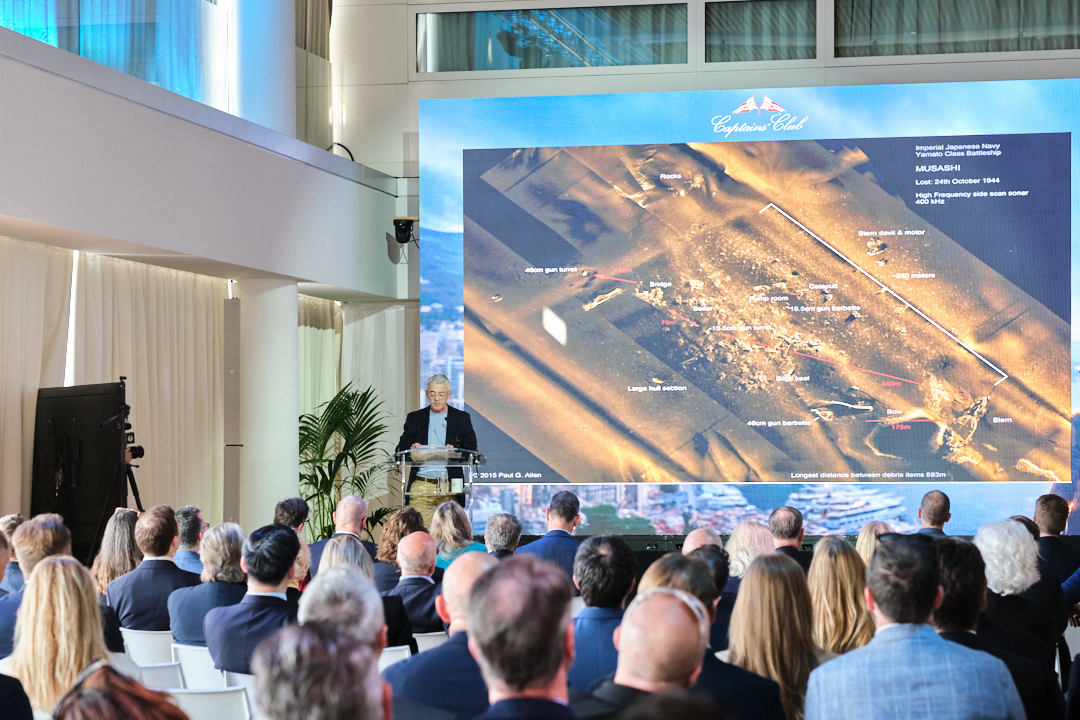
Maritime explorer David Mearns, a renowned deep-sea shipwreck research specialist, recounted several missions on yachts and exploration ships. Describing how the Japanese battleship Musashi was discovered, he highlighted the considerable technical resources required: “When you find a wreck so lost that even the great Bob Ballard said it couldn’t be found, people take notice”. And he underlined the role big yachts could play thanks to imaging and mapping technologies: “It’s remote telepresence in its purest form”. Regards mapping campaigns conducted with multibeam sonars: “Starting from a blank canvas, the FALCOR’s multibeam sonar mapped a two-mile-high seamount with a resolution of 10 meters”.
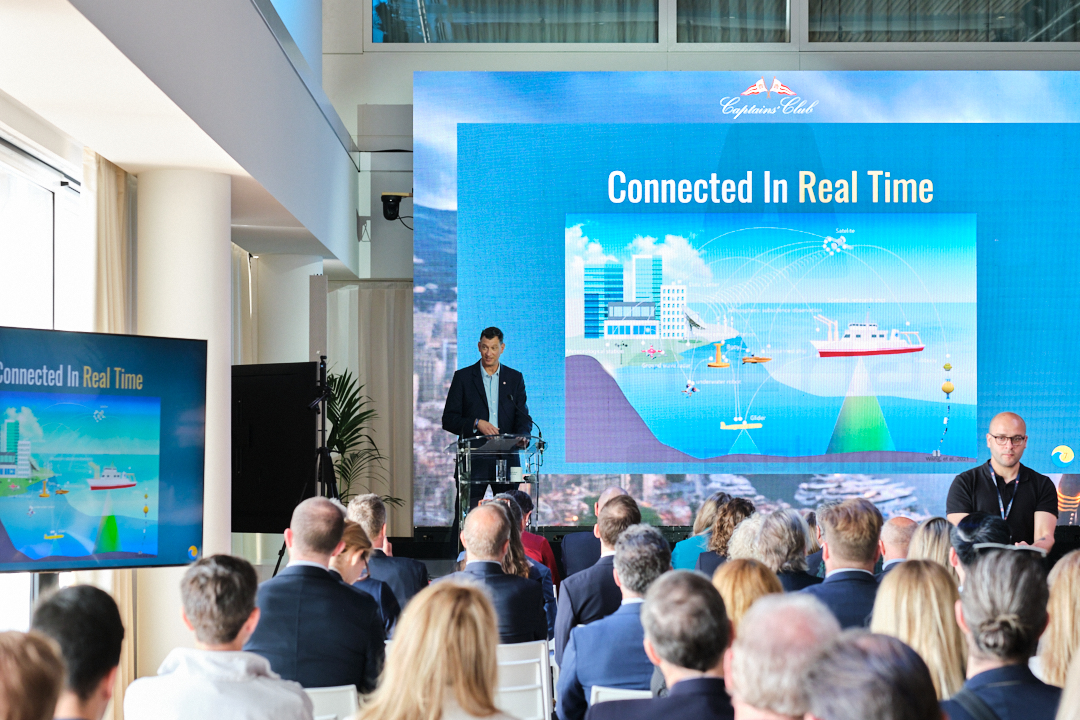
A former captain of NOAA oceanographic vessels Commander G. Mark Miller, a mapping and data collection expert, advocated for more use of large yachts in scientific programmes in his presentation entitled ‘Charting the unknown: passive solutions for collecting data’. In his view, the main obstacle for research remains access to open ocean areas. The solution? Integrating passive date collection systems without disrupting the yacht’s operations. “What if data was discreetly collected on every voyage?” he asked captains and owners: “The technology exists. The need is there. The choice is yours. Let’s make every mile count”.
Dominique Geysen, an engineer and designer of exploration yachts presented ‘SailXplorer: every captain’s dream, the ultimate exploration yacht’ concept, a vessel designed to accommodate researchers, submersibles and science equipment while minimising the boat’s environmental impact. Regards the origins of his project he said: “I could no longer turn a blind eye to tourism’s omnipresence, the environmental degradation and the distress of certain species”.
His approach utilises wind propulsion: “Doesn’t it make sense to add a sail into the equation to reduce carbon emissions and sail the world?”. The solutions are there, he argues: “The question is not if the technology exists, but what we are going to do with it to benefit our industry and the world in which we want to live”.
A yachting professional involved in ocean mapping programmes, Taigh MacManus stressed how much progress has been made with recent technologies, enabling yachts to get involved. “When I joined this programme in 2013, we had only mapped 15% of the world’s oceans. Today that figure is 26%”. The democratisation of tools creates new possibilities: “The technology has progressed and is now accessible”. He also highlighted the value of involving crews and passengers: “We can make science tangible and concrete for guests”, he said, concluding that “opportunities today to cooperate with scientists are unparalleled”.
Finally, a sailor committed to citizen science, Emily Cunningham showed how crews can contribute via data collections during voyages. Her presentation focused on simple protocols that can be used on board without cumbersome equipment, enabling sailors and guests to get involved with observation tasks. “I’ve been doing this job for 15 years and see the same problems coming up again and again. One of the biggest ones is access to sailing time for researchers”. The approaches she described make research more accessible and strengthens links between navigation, scientific knowledge and ocean protection.
One simple message emerged from these presentations: that a yacht is no longer just a tool to go cruising but also a platform for exploration and research.
Share: